



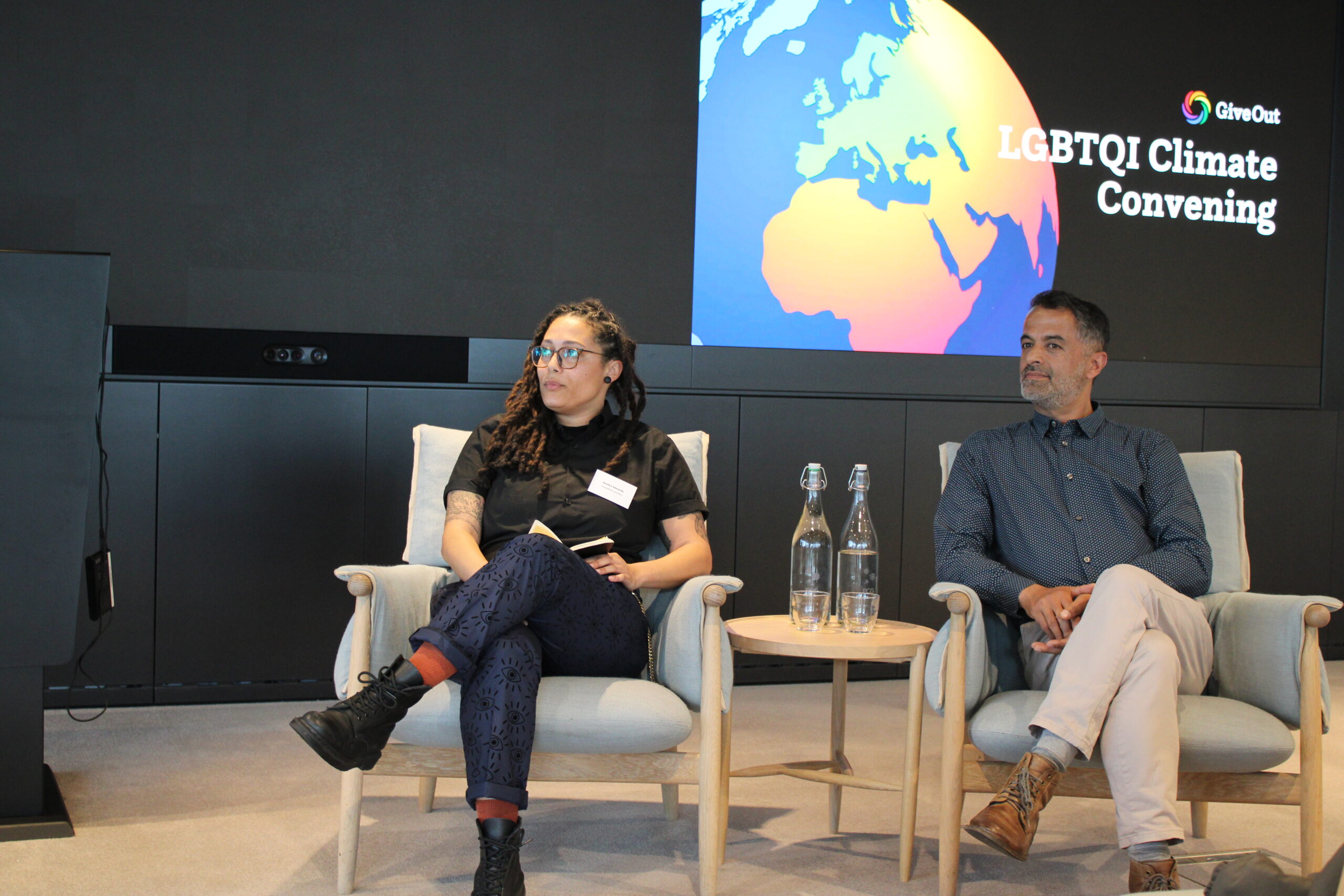
Kendra Edwards brings a unique perspective to climate philanthropy. As Associate Director of the Justice and Equity team at ClimateWorks Foundation, their background in community-based social work spans youth programming, mental health, violence prevention, employment, and housing. This experience shapes how they approach climate justice.
‘I come to this work with that same systems-level social work perspective,’ Kendra explained. ‘Thinking about how we can redesign systems so that everyone’s safe and everyone’s needs are being met.’
ClimateWorks Foundation acts as a catalyst for climate progress, working with philanthropy to identify and scale transformative solutions globally. With collaborations spanning over 80 funders and partners in more than 50 countries, their work is grounded in the belief that the most effective and durable climate solutions are those that bring real benefits to the people and communities they’re intended to serve.
Kendra attended GiveOut’s world-first LGBTQI Climate Convening in March last year, and the experience reinforced what many in the sector are beginning to understand. LGBTQI organisations are not simply vulnerable populations requiring assistance, but strategic actors leading climate solutions.
‘The convening really positioned LGBT organisations not just as recipients of aid but as strategic actors and leaders in the climate field,’ Kendra reflected. ‘LGBT organisations do have a strategic value add and unique assets. The community resilience, the mutual aid, the multi-generational and cross-movement connections that we’ve always made.’
The convening showcased vivid examples of how LGBTQI organisations across the globe have responded to climate impacts, from heat waves in Nigeria to flooding in Tonga. These organisations ran emergency shelters, led disaster preparedness initiatives, developed renewable energy projects, and advocated for more inclusive climate policy.
‘There were so many examples of how LGBT organisations are assets and are leaders,’ Kendra said. Systemic issues like legal identity barriers, healthcare access, and family relationships heighten LGBTQI communities’ exposure to climate threats. Yet these same communities bring invaluable expertise in navigating adversity and building resilience from the margins.
For Kendra, the convening also highlighted philanthropy’s crucial role in this work. Climate funding has grown significantly over the past decade, but there remains a clear need for more trust-based practices. Frontline organisations need flexible, unrestricted funding as they face tremendous need with limited resources.
‘Climate philanthropy holds a unique position because philanthropy can take some different risks to invest in more innovative solutions,’ Kendra noted. ‘Our role is really to drive action with insights and mobilise that funding to meet the needs of folks that are most impacted and unlock more transformative solutions.’
Collaborative spaces like the convening allow funders to hear directly from those leading and living the work ‘It’s an opportunity for us to have that shared learning,’ Kendra explained. ‘It grounds that abstract discussion of vulnerability and climate impacts in real lived experience and localised and historical social context as well, to really understand on the ground what are the different barriers and the different types of solutions that are going to be needed.’
When asked why it’s vital to increase funding at the intersection of LGBTQI rights and climate justice, Kendra’s response was clear: ‘LGBT organisations are not only working to ensure the resilience of our communities, but they’re also contributing meaningfully to climate movements across mitigation and adaptation and just transition initiatives. They’re already acting as drivers of change and their inclusion only strengthens climate outcomes and ensures that no one is left behind.’
LGBTQI organisations offer unique expertise in navigating adversity, building community resilience, and innovating from the margins. Supporting their work doesn’t just protect vulnerable communities but strengthens the entire climate movement.
As Kendra put it, ‘We’re really looking for who’s most impacted and who’s left out of current policies and funding and actions. LGBT organisations offer very unique expertise, and their inclusion only strengthens the whole movement.’
To learn more about the incredible work of ClimateWorks, go here.