


Jason Ball, Executive Director, GiveOut
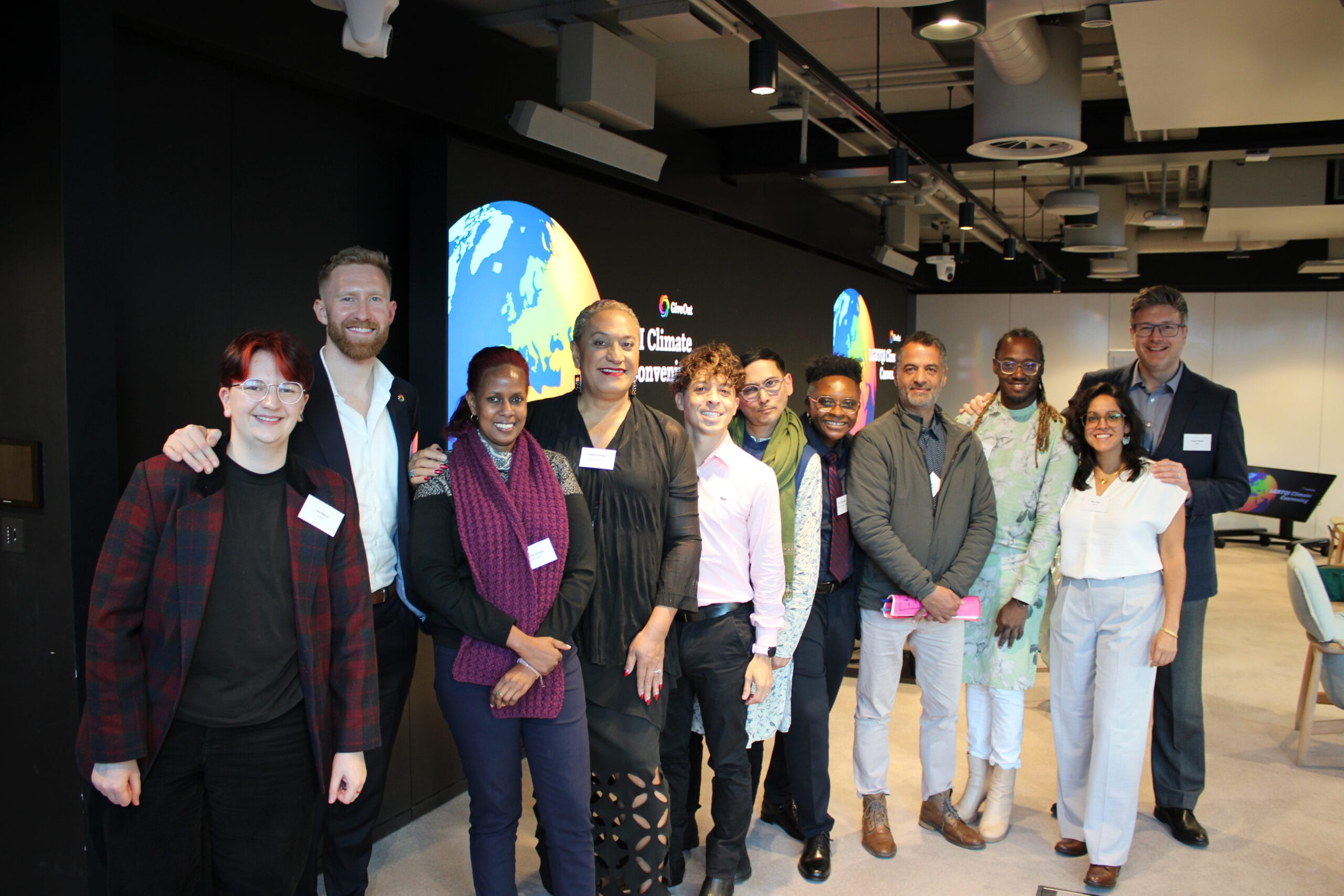
A year ago, GiveOut’s LGBTQI Climate Convening brought together activists from the Global South, researchers, and funders from across the climate, environment, and human rights sectors. Together, we explored the intersection of climate change and LGBTQI rights, and developed strategies to overcome the funding barriers holding back progress. Twelve months on, a landmark new report confirms what we heard at the convening, and makes a compelling case for change that demands a response.
New Research on LGBTQI Communities and Climate Change
Published this month by the Williams Institute at UCLA Law, Sexual Orientation and Gender Identity in the Global Climate Change Architecture, authored by Victor Madrigal-Borloz, former UN Independent Expert on Sexual Orientation and Gender Identity (SOGI), it provides the most comprehensive analysis yet of how LGBTQI people are excluded from global climate policy. It examines how the widespread exclusion of LGBTQI people in climate plans increases systemic barriers and risks.
The findings are stark.
While 85% of countries participating in the Paris Climate Agreement acknowledge vulnerable communities, only 8% recognise LGBTQI communities. In Eastern Europe, no countries mention LGBTQI people at all. This exclusion has real-world consequences. It limits LGBTQI people’s access to information, healthcare, housing, and emergency support, and increases exposure to violence in times of crisis.
As Madrigal-Borloz puts it: ‘Failing to include LGBTQI individuals in climate plans is not only a policy gap and a breach of international human rights law. It also highlights the systemic vulnerabilities that LGBTQI people face every day worldwide, which climate change will worsen.’
LGBTQI Communities Leading from the Frontlines
LGBTQI organisations have been navigating and responding to this for years. Increasingly, that response is taking forms that challenge how we think about climate action itself.
In Guyana, GiveOut grant partner SASOD Guyana has spent over two decades at the forefront of LGBTQI advocacy, leading the fight to decriminalise same-sex intimacy and challenge the structural inequalities that shape LGBTQI experiences. In recent years, they have expanded that work to include climate justice, recognising that the worsening climate crisis compounds the same inequalities they have spent years fighting.
Guyana is a country of extraordinary biodiversity, but it is also acutely exposed to flooding, drought, and rising sea levels that already threaten its capital, Georgetown. Queer and trans people facing workplace discrimination are more likely to end up in precarious housing in flood-prone coastal areas, meaning that when extreme weather strikes, they are among the hardest hit.
In 2024, SASOD joined a regional climate alliance through the Caribbean Natural Resources Institute and began mapping climate impacts on queer communities, helping to build a national evidence base that has until now been almost entirely absent.
All of this is unfolding alongside rapid economic transformation driven by offshore oil production. SASOD is working to ensure that LGBTQI communities are part of that conversation, not left behind by it.
A similar story is emerging across regions. Equal Asia Foundation (Equal AF) is ensuring LGBTQI people have a seat at the table in global policy discussions. Last year, Equal AF contributed to the UN Independent Expert on SOGI’s landmark report on LGBTQI displacement, providing evidence on how informal employment exposes queer people to climate vulnerability and trafficking, how climate anxiety is affecting LGBTQI mental health, and how disabled LGBTQI people face compounded risks that remain largely invisible in both queer and environmental discourse.
Their submissions also highlighted the troubling dynamic that GiveOut has heard repeatedly from partners: in times of political or economic crisis, LGBTQI people are often scapegoated. As Equal AF noted, this can ‘allow political leaders to deflect attention from broader State failure.’ Understanding this pattern is essential to build responses that truly protect the most marginalised.
Invisible to the Systems that Matter
These are the frontline realities that GiveOut’s LGBTQI Climate Convening was designed to surface, and that our report, Bridging the Gap: Resourcing LGBTQI Climate Action, sought to document and respond to.
The Williams Institute report reinforces a critical point: global climate systems do not treat everyone equally. Instead, they replicate the same exclusions that already exist in society. This leaves many marginalised communities, including LGBTQI people, invisible to the systems that matter.
If you are not named in global climate agreements, you will not be funded. If you are not funded, you cannot build resilience.
And yet, despite this systemic exclusion, LGBTQI communities continue to lead.
Across the world, LGBTQI organisations are building emergency shelters, developing renewable energy solutions, training refugees in sustainable farming, and forging cross-movement alliances, often without the recognition or resourcing their work deserves.
One year on from the convening, the picture is clear. LGBTQI communities are disproportionately exposed to the climate crisis, and disproportionately excluded from the systems designed to address it. At the same time, they are among its most determined and creative responders. The evidence is there. The organisations are there. What is missing is the funding, and that is a choice funders can change today.
The Moment for Climate Action is Now
GiveOut’s LGBTQI Climate Fund offers a practical pathway to change that. It provides flexible, core funding to LGBTQI-led organisations in the Global South, giving them the certainty to plan, grow, and sustain their work. Our goal is to reach £1 million over the next three years.
The Williams Institute report is a clear call to action for policymakers and funders alike. We have the evidence, now we need the action and the investment to match the ambition of LGBTQI organisations already doing this vital work. With your support, we can ensure the world’s climate systems include LGBTQI people everywhere.