

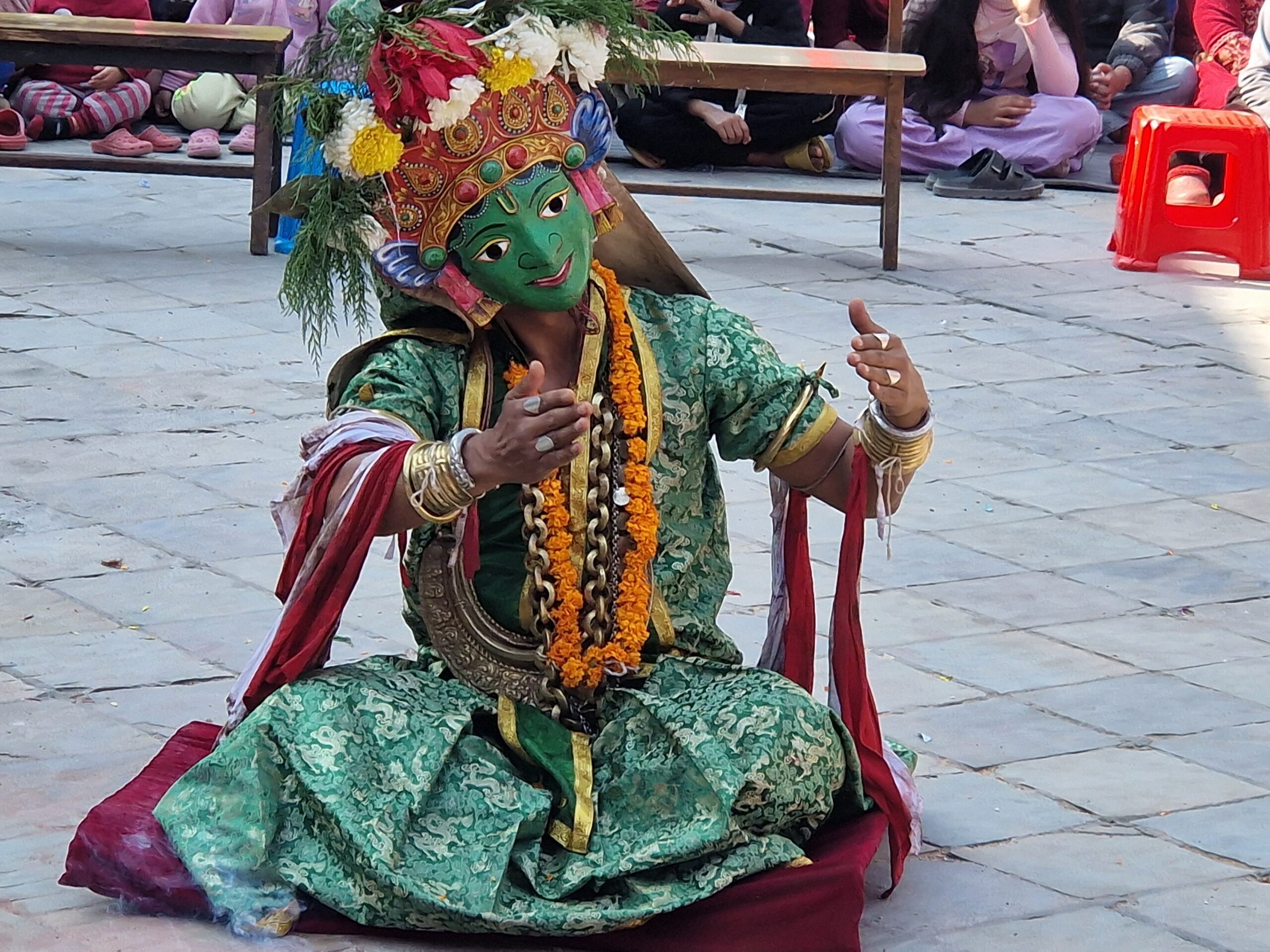
Long before contemporary conversations about LGBTQI rights took hold in the West, Nepal’s temples stood adorned with carvings celebrating gender diversity. Sacred “Ajima” grandmother goddess shrines, some dating back 2,000 years, have always been guarded by third gender communities. These aren’t relics of a forgotten past – they’re living testament to a cultural understanding that predates colonial impositions of the gender binary.
Sunil Babu Pant founded Blue Diamond Society in 2001, becoming one of South Asia’s most influential LGBTQI advocates. In 2007, he helped secure a landmark Supreme Court ruling that declared gender and sexual minority people “natural”, a direct rebuke to those who claimed LGBTQI identities were Western imports. The decision mandated legal recognition for third gender identities and paved the way for marriage equality discussions, inspiring similar movements across the region.
In this conversation, Mayako Pahichan’s Executive Director, Sunil, sheds light on the rich tapestry of gender diversity and same-sex relationships in Nepal, the importance of decolonising funding, and how Nepal became a beacon for LGBTQI rights throughout the region.
Can you tell us about pre-colonial gender diversity and same-sex relationships in Nepal?
Thousands of years ago, we had a matriarchal social system. We have old surviving temples dedicated to many goddesses – they’re called Shakti, which means power. Around them you find a lot of gender diverse statues, images, carvings, symbolism that shows the acceptance of gender diversity and diverse sexual preferences because they’re portrayed in and around sacred places which are revered.
We call them Ajima temples – Ajima means grandmother goddesses. All the Ajima temples have at least one gatekeeper, if not two, from gender communities. We called them third genders, and they have different indigenous names. Some terms have been taken by patriarchy as derogatory, but they’re still worshipped because even within patriarchy, the goddesses survived and their power and reverence continued.
One tradition which is very fast evaporating is the relationship between two same-gender people, especially between men and women. We call them Mith, which in Sanskrit is Maitrī – benevolent, much more than friendship.
It must not come from your blood relationship, and it’s not arranged by your family like traditional marriages. We call it Mithlani, forming this bond, and it’s socially celebrated – not just accepted, celebrated.
We grew up in a cultural, social system which valued this kind of same-sex bond for life. We had much more diverse relationships and identities in pre-colonial times.
When I grew up, you still saw them going to a temple and the priest would come. The relationship can be formed at any age. If children play together and get very bonded, both families might say they should come as a Mithlani – a relationship that lasts at least for this life. There’s no expiry, no divorce, because there’s no control, no limitations, no boundaries. It’s just loving and respecting each other. It’s boundless.
Once you form this relationship, they say you also exchange what we call Bhagya. It is not just luck, but all the things destined to happen in your life. That also gets shared or exchanged. It’s that level of intimacy, even in the spiritual sense.
We grew up in a cultural, social system which valued this kind of same-sex bond for life. We had much more diverse relationships and identities in pre-colonial times.
You mentioned the third gender. How do you define that?
Women are the highest number by population. Then men. But those born male or female can grow differently – other than men and women. They’re named under the umbrella term “third gender,” from the phrase tritiya prakriti, meaning “person of third nature.”
So you have a person of feminine nature, person of masculine nature, and person of third nature. Third nature has at least five subdivisions: male-born third gender, female-born third gender, intersex people and so on.
I made a documentary a year and a half ago called “Ajima and Six Genders.” There are six or seven genders clearly accepted, and we find statues around the Ajima temples in the heart of Kathmandu, constructed around 2,000 years ago.
Do these traditions survive today?
We do have surviving dance and music played by indigenous communities even today. In the far west region, the Singaru dance is still popular. During festivals, some men volunteer to dress up – not entirely in women’s costume, but a mix – and they dance in very feminine, synchronised movements with rhythmic music. Everyone loves them. Nobody takes them negatively. They’re celebrated and honoured. It’s part of religious celebration, without them it’s not possible.
In Gurung communities during colonial times when the British formed the Gurkha regiment, their favourites were Gurungs and Magars from Nepal’s hill region. They have Maruni and Saurati dances where men dress in beautiful, colourful dresses. People call it women’s dress – I call it much more than women’s dress. It’s much more colourful, vibrant, with feminine energy.
We have different dances and music popping up almost every fortnight by different communities. It’s never-ending enjoyment and excitement.
There’s no equivalent term in English or Western language. It’s like a very traditional way of doing drag. It is very loud, very vivid, but not provocative. It’s a mix of natural, vivid, vibrant colour with feminised movements and gesture and performance. Even women are jealous of these men! We have different dances and music popping up almost every fortnight by different communities. It’s never-ending enjoyment and excitement.
What can people in the West learn from Nepal’s LGBTQI history?
A bit of broadening their mind. I know the West is very rich and a lot of funding comes with good faith. But Western activists and foundations often come with a colonial mindset, that developing countries are very poor, very uncivilised. They have resources, not just financial but knowledge. So they try to impose, thinking they’re teaching. But it’s not teaching, it’s imposing their knowledge, identity, vocabulary, which is very limited on gender diversity.
Provide financial resources because we need them – because of colonialism and proliferation of colonial anti-LGBTI laws that our countries adopted. We have to undo that. But you have to understand that our culture may be beyond binary, and the diversity perhaps you may not easily understand right away because you’re used to binary. If not, you want to see transition and somehow assimilate back into binary again. But here, gender is much more plural.
The respect here is not coming just from a human rights perspective. It’s not just a rights-based approach. It’s more of a cultural celebration. The social fabric has taken this community as an asset, not a liability or something fallen from grace.
Is there a story from your region’s history that personally resonates with you or that you return to for inspiration?
Definitely the event in 2007. At the time we had four organisations in Kathmandu. I founded Blue Diamond Society in 2001. It was just after the second mass movement against the autocratic monarchy’s direct ruling, and also during the Maoist insurgency when a peace accord was happening. We were all together protesting in the streets.
That’s where I made connections to political parties. But once the interim government formed, the leaders I knew in the streets were refusing to meet and listen to our demands. I realised once you get into power, you’re no different from the kings – showing your back, overlooking us, not even recognising us.
We decided to file a writ petition to end all kinds of violence against LGBTI, to give us citizenship or ID cards that represent our true gender – for those different from men and women – and same-sex marriage if possible, or some legally recognised same-gender relationship.
It was the first time ever the authority – a Supreme Court – recognised this community and issued a judgment in our favour. It’s had a very positive impact until today and will continue to shed good light in coming years.
After four hearings in eight months, the Supreme Court issued a fantastic, historic decision. Nepal’s courts have a unique way of delivering justice – they put out a summary the same day, then the full judgment comes months or years later. The first line was: “Gender and sexual minority people are natural.” Huge – because we used to get backlash saying this is foreign-funded, it’s unnatural being LGBTI. The court gave that fantastic statement.
It issued three directive orders to the government. One: amend all discriminatory laws and policies against LGBTI. Two: issue third gender IDs according to people’s gender identity, for those who are non-binary. Three: set up a same-sex marriage study committee to study social, cultural, economic, and legal implications, then approve whatever they suggest in law.
It was the first time ever the authority – a Supreme Court – recognised this community and issued a judgment in our favour. It’s had a very positive impact until today and will continue to shed good light in coming years. It’s inspired other countries, parliaments, courts, and communities throughout the region.
The Indian Supreme Court referred to this case in 2018 when they removed Section 377, the sodomy law. Thailand and a few other countries have referred to it. It’s still very iconic.