

Nigeria is one of the most hostile environments in the world for LGBTQI people. The Same-Sex Marriage Prohibition Act, passed in 2014, criminalises same-sex relationships with up to 14 years in prison. Its impact has rippled far beyond the law itself, embedding discrimination into everyday life, family structures, and institutions. For LBQ women and gender nonconforming people, that hostility compounds with the broader marginalisation of women in Nigerian society, creating a web of intersecting challenges that mainstream LGBTQI spaces have often failed to address.
The Women’s Health and Equal Rights Initiative (WHER) was founded to change that. Built around the specific needs of lesbian, bisexual and queer women and gender nonconforming people in Nigeria, the organisation works across empowerment, legal support, safe housing, and movement building, guided by the belief that lasting change begins with the person. We spoke with Akudo Oguaghamba, Executive Director of WHER, about the realities facing LBQ women in Nigeria, what it takes to build community under those conditions, and why queer joy is not a luxury – but a form of resistance.
WHER focuses specifically on lesbian, bisexual and queer women and gender nonconforming people. Why is it so important to have organisations dedicated to LBQ communities rather than just the broader LGBTQI space?
Our experiences are completely different, and it’s important to recognise that, regardless of the fact that we’re part of the larger community, we need to specifically focus on certain issues.
I got into this space to understand and to fellowship with my kind. And when I got there, I saw that organisations calling themselves LGBTIQ organisations were mostly made up of gay and bisexual men, and maybe one lesbian woman. So I asked: where are the women? I was told: “Women don’t come out.” That felt like a very careless response to me. Why don’t women come out?
“Bring women into a room of their own, and you see how much more comfortable they are in their own space, in their own skin, in their own voice. They can articulate their needs. Mixed spaces make that so much harder, and we go back to how society has placed women at the back of the house.”
I found that a lot of the time, when women do come out, they’re not used to speaking. That goes back to the way society has always deprioritised our voices. I’ve seen this play out over and over, even with my mother, my grandmother. Women’s voices are not heard, so they prefer not to speak. Whenever there are mixed spaces, regardless of sexual orientation, women immediately clam up or disappear. But bring women into a room of their own, and you see how much more comfortable they are in their own space, in their own skin, in their own voice. They can articulate their needs. Mixed spaces make that so much harder, and we go back to how society has placed women at the back of the house.
LBQ women and gender nonconforming people exist at multiple intersections, often holding many marginalised identities. What are the specific struggles and challenges that come with that in Nigeria?
Just as I mentioned, the place of women is assumed to be at the back of the house. In fact, one of our presidents said that his wife’s place is “in the other room” – we actually call it the other room. The first citizen of Nigeria said that. Just imagine how the average Nigerian then thinks.
The SSMPA (Same-Sex Marriage Prohibition Act) and other laws fuel stigma, violence and discrimination. I remember when it was passed in January 2014, I was standing on my balcony and I saw young primary school children walking to school, holding hands, chanting: “14 years! 14 years!” These kids weren’t on social media. They didn’t read newspapers. They were children. That’s how swiftly and completely a law against LGBT persons embedded itself into everyday life, even in the most unexpected places.
Then there is the woman who is not supposed to have a sexuality, who is not even supposed to understand sexual relationships as pleasure. She’s supposed to have sex only to reproduce. Talking about sex is considered taboo. So how do you talk about sexual and reproductive health? How do you talk about pleasure, which feels completely off the table for us?
There is also family rejection. After the SSMPA was passed, many families increased their surveillance of their children. They monitored who they spoke to, who they called friends, where they went, what platforms they were on. That created enormous pressure around marriage. We had to help many people into safe houses because they’d been locked in their homes. Men were invited to come and sleep with them in what people call “curative rape.” There is nothing curative about rape. Rape is rape. Parents watched people rape their children because they believed their children were lesbians. This is specifically what queer women face, because we are supposed to be weak, not strong, not to have sexualities, not to have a say. We are treated as though we were designed only to reproduce and take care of the world.
There is also forced marriage, and enormous pressure to marry. When you refuse, you hear: “I will disown you.” That’s actually one of the reasons we do so much work around empowerment, especially financial empowerment. Because you can only survive being disowned if you’re financially stable.
Then there is economic exclusion. For queer women, the family assumption is that you’re not going anywhere, you won’t be “taken out of the family” by a man, so you’ll need inheritance, and they want to shut that down early. You don’t even have a footing from which to start shaping your own life.
And if you go to hospital, the first question is “When did you last have sex?” with the assumption built in that you’re sleeping with men. I’ve been in that situation. As an empowered woman, I decided to answer honestly. I said “Two days ago,” and the doctor began using “he.” I said “she.” The doctor excused himself and a different doctor came in. I didn’t need a prophet to tell me that my own doctor had disowned me.
And how does that shape the kind of support WHER provides. What does your day-to-day work actually look like in practice?
Our work is rooted in community care and practical support for the person. At WHER, we always say it’s all about the person. It’s about figuring out what someone needs to actually live through the day, build their own strength and voice, and contribute back. One tree can never make a forest, we need to grow more trees, and we call ourselves a community.
We have five pathways to empowerment: psychological empowerment, because we believe poverty starts with the mind; gaining and maintaining employment, matching people with partner organisations so they can build the experience needed to secure work; running a small-scale business for those who want to invest in themselves; volunteering and mentorship; and leadership, which we call leading self and leading others.
We also run a safe house and reintegration programme, a network of 18 paralegals across Nigeria providing first-line legal support, and psychosocial care for community members and for our own team, because absorbing secondhand trauma causes burnout long before the year is out. This is not a sprint. It is a very long race.
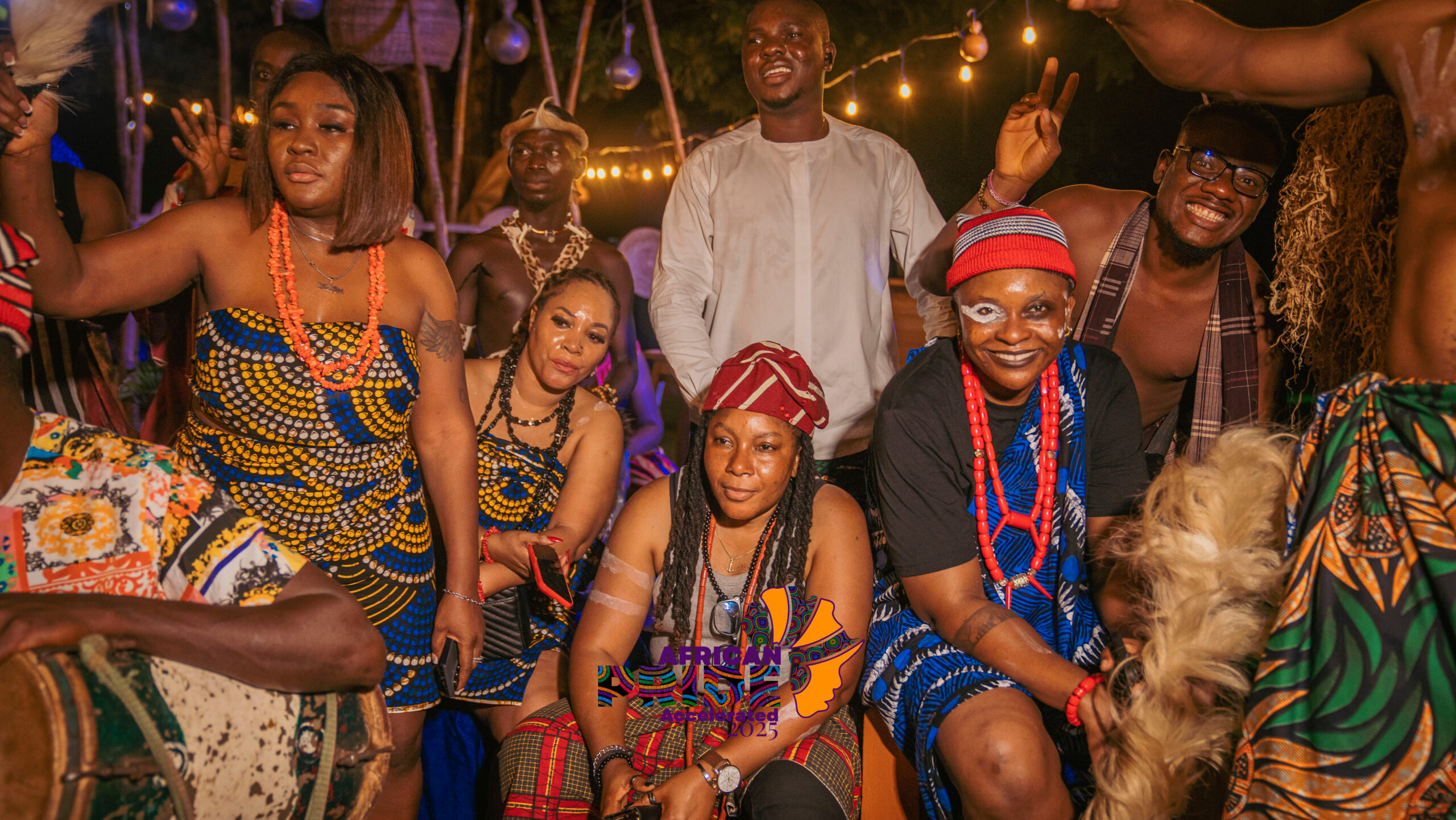
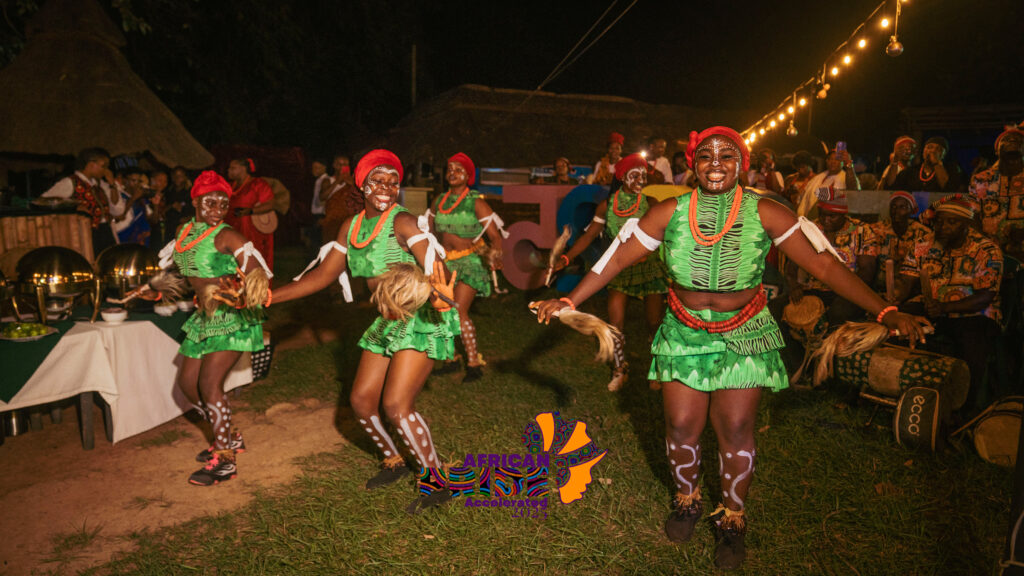
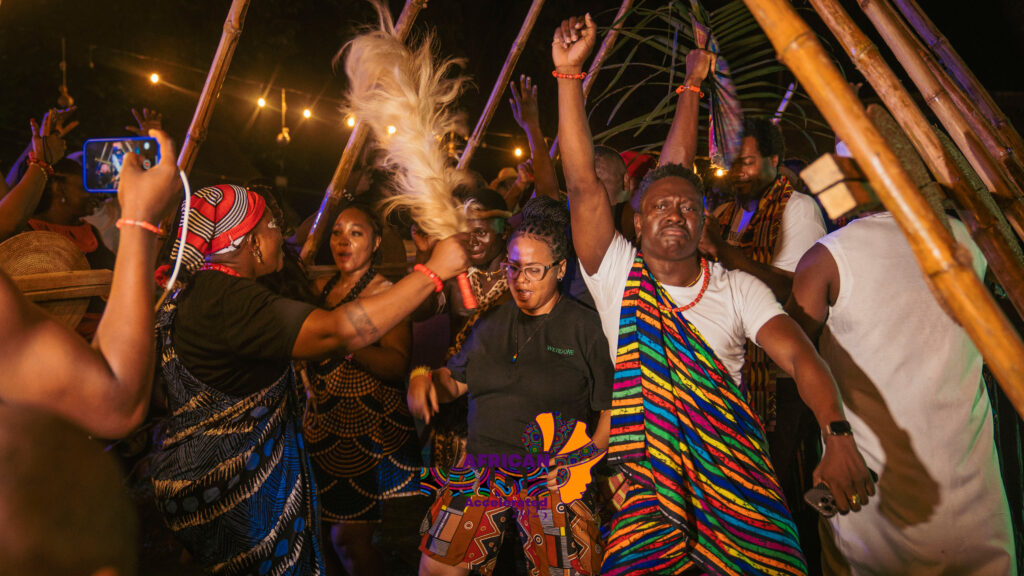
We also do movement building. The LGBTQI community depends on us to help weave the movement together. And one of our projects, African Pride Accelerated, I wish I could fully explain what that platform means for the community in Nigeria. It’s hard to capture in writing or pictures or video, but it has become home for us. It’s a platform where we can connect to our innermost queerness and the queer joy that we carry.
“I think queer joy is advocacy. I think queer joy is activism. A lot of the bickering within our movement comes from removing joy from activism and advocacy. Queer joy introduces the word “we.” It stops being “I” or “you.” It becomes “we.”
There is also so much joy and creativity and resilience in the LBQ community that needs to be shown and celebrated more. What does queer joy look like for the people you work with? And do you think it’s just as important as advocacy?
I think queer joy is advocacy. I think queer joy is activism. A lot of the bickering within our movement comes from removing joy from activism and advocacy. Queer joy introduces the word “we.” It stops being “I” or “you.” It becomes “we.”
Queer joy is survival. But it’s more than survival, it’s about thriving. It requires trust, opportunities, resources. And it’s very hard to quantify, your standard KPIs won’t capture it. You can’t write a log frame entry saying “queer joy was achieved by X, Y, Z.”
But when you introduce joy into any form of struggle, it becomes fun, something you can sustain. Last year, when we went to close the WhatsApp group we’d set up for African Pride Accelerated, we received serious pushback from the community. “Don’t you dare close this WhatsApp group.” People said it gives them joy to wake up every morning and say “Good morning, everyone,” to say “I’m walking through Lagos, who else is here?” It has organically become something the community is trying to resource itself, because we can’t always explain to donors why these spaces matter, for building joy, connection, togetherness, for strategising over a bottle of beer.
Every time we get together, it’s not to sit around saying “they are killing us.” We gather to celebrate the incredible work people are doing. We have artists, dancers, crafters, researchers. We already know the anti-rights groups are coming for us. The question is: how do we survive them?
That is what queer joy is all about. It is a form of resistance. Sustainable resistance.
It is currently Women’s History Month, which is often dominated by a more mainstream narrative of women’s rights. What would you want the global feminist movement to better understand about the leadership of LBQ and GNC women in Nigeria?
We are not just the pain. We are not just the struggle. We are also leaders. We understand politics. We can speak on political matters, on construction, on farming. We are women too, we experience all the issues that women experience, and more, because of our sexual orientation. I want them to see us as human beings.
To come into the feminist movement, which should understand what struggle means, and be straitjacketed into: “Tell me about the challenges LBQ women experience,” I want to tell you not only about the journey, but the visions I have for tomorrow. I want to tell you that we are organisers, we are movement builders, we have experience.
I remember one feminist I still hold very dear, whenever there was a protest, she would call me and say: “Show up. Bring your girls.” And we would show up, sometimes with our flag. Without her, I wouldn’t have been able to access those platforms. And once I accessed them, I opened doors and windows to make sure other LBQ women had access to those feminist spaces too.
It also comes down to resourcing. When people ask about our annual budget, they are always shocked. We might raise $50,000 in a year, $100,000 at most, and we are running an organisation and doing great work. We have been raised to be humble, not to ask for more. But while we are fighting this battle and being bold, we need resources and support to continue doing the work.