

Across East Africa, the legal and political environment for LGBTQI communities continues to become more challenging. The impact of Uganda’s Anti-Homosexuality Act continues to reverberate across the region, emboldening anti-rights actors and increasing pressure on LGBTQI organisations. In countries such as Uganda and Ethiopia, groups working to support LGBTQI communities face growing funding and operational restrictions, while activists in Tanzania and Burundi report increased surveillance amid intensified state crackdowns.
Meanwhile, in Kenya, same-sex relationships remain criminalised under Sections 162 and 165 of the Penal Code, while renewed efforts to introduce Uganda-style legislation, including the Family Protection Bill unveiled at the 2025 Pan-African Conference on Family Values, reflect a broader regional backlash against LGBTQI rights.
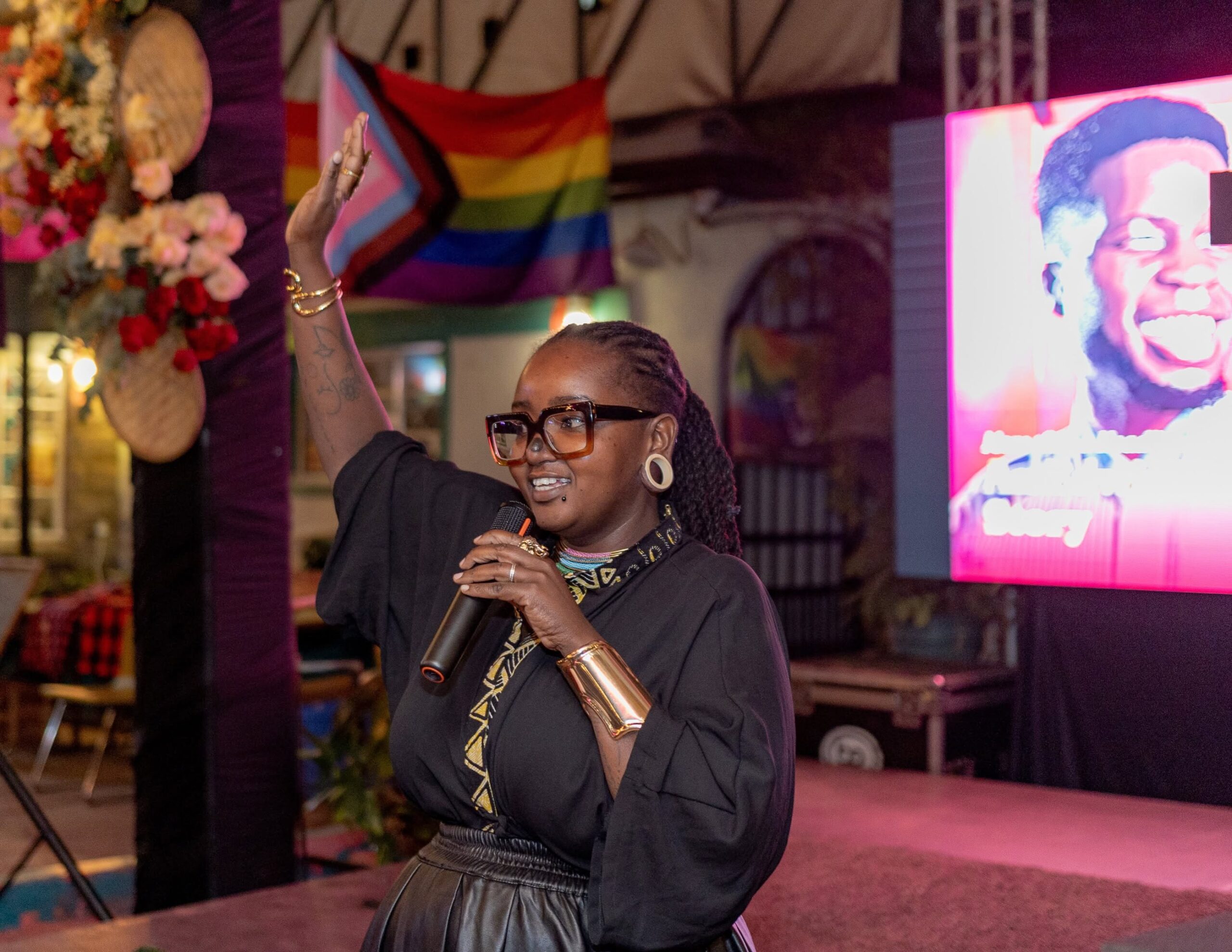
Through GiveOut’s Legal Aid Fund, LGBTQI organisations receive financial and pro bono legal support to challenge discrimination, defend rights, and advance equality. We spoke with Njeri Gateru, Executive Director of Kenya’s National Gay and Lesbian Human Rights Commission (NGLHRC), about the power of strategic litigation, the importance of international solidarity, and why legal aid remains one of the most effective tools for protecting LGBTQI rights.
Could you start by introducing yourself and your organisation?
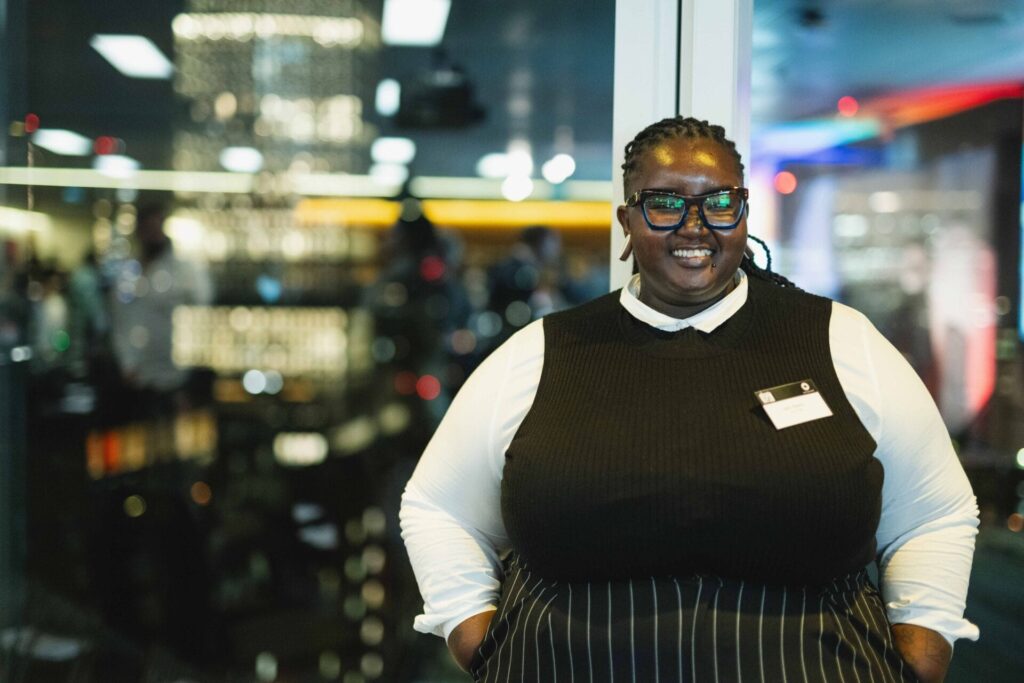
My name is Njeri Gateru. My pronouns are she or they. I’m a queer human rights lawyer from Kenya, I identify as a feminist, and I work as the Executive Director of the National Gay and Lesbian Human Rights Commission (NGLHRC).
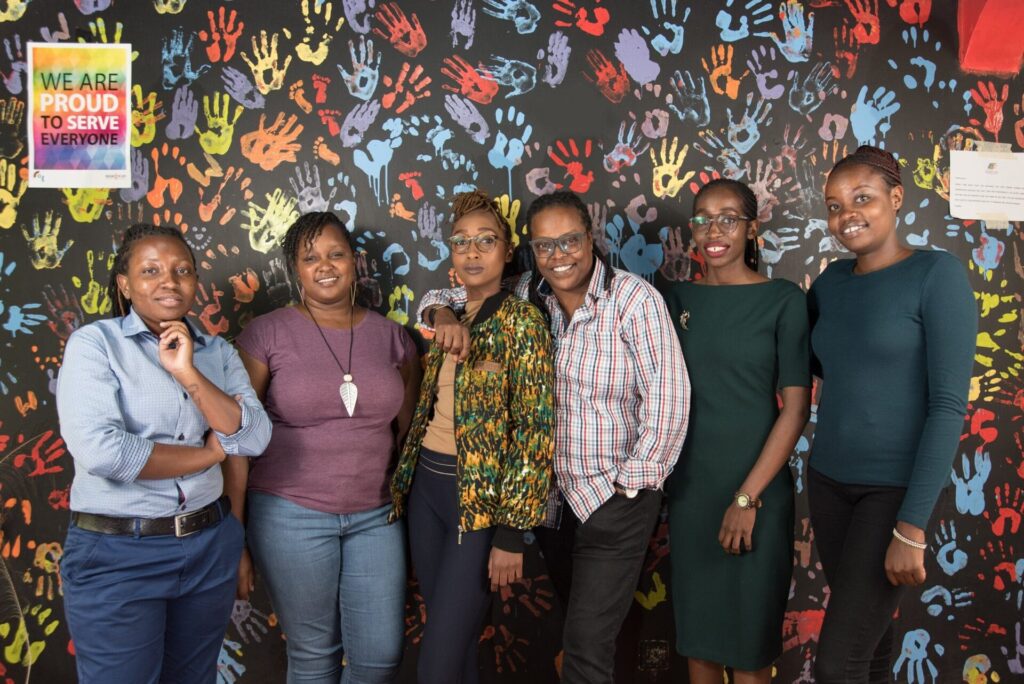
At NGLHRC, we use the law as a tool of activism to advance the rights of LGBTQI people in Kenya. It’s also about imagining and creating a future where all of us belong, in spaces of community and happiness.
We provide free legal support to people whose rights have been affected because of their sexual orientation, gender identity, or gender expression. That includes legal representation, strategic litigation, and holistic support throughout their legal journeys.
Alongside that, we challenge discriminatory laws and policies through the courts, while working with the legal system to help ensure LGBTQI people can access the rights and protections guaranteed by Kenya’s Constitution.
At NGLHRC, we use the law as a tool of activism to advance the rights of LGBTQI people in Kenya. It’s also about imagining and creating a future where all of us belong, in spaces of community and happiness.
What first drew you to the intersection of law and LGBTQI rights?
I grew up around a large refugee and asylum-seeking community in Kenya and always imagined I’d work in refugee protection. During law school, I did exactly that, supporting organisations working with refugees and asylum seekers.
Around 2012, Kenya began receiving increasing numbers of people fleeing persecution because of their sexual orientation and gender identity, particularly from Uganda and elsewhere in the region. At the time, many organisations working in refugee protection didn’t yet understand that queerness itself could be the reason someone was forced to leave home.
Working in that space made me look inwards. Together with the people who would go on to found NGLHRC, we saw ourselves in the people we were supporting. The difference was that we weren’t yet being forced to leave home.
But if things continued as they were, there was only one certain path for all of us. Kenyan LGBTQI people would also have to leave home to seek protection elsewhere.
For me, the call to activism was to stop that. We had to make sure there were solutions at home. I never wanted to reach a point where the only possibility of safety meant leaving home.
Using the law came naturally because we were lawyers, and we believed that was where our work was most needed.
Before launching NGLHRC, we spent nine months travelling across Kenya, speaking with LGBTQI communities about their priorities. Again and again, people told us the same thing: the biggest barrier to imagining a happy future was living in a country where same-sex relationships were criminalised and punishable by up to 14 years’ imprisonment.
That became our starting point.
What are the biggest legal barriers facing LGBTQI people in Kenya today?
The grand norm for Kenya, the main source of law, is our Constitution. She’s a mother. Our Constitution is mother.
We have a really wonderful Constitution. It’s a progressive document with an expansive Bill of Rights that seeks to protect all Kenyans. But alongside it, we’ve inherited colonial-era laws. Sections 162 to 165 of the Penal Code criminalise consensual same-sex relationships between adults.
That means many Kenyans simply understand homosexuality to be a crime.
Most people don’t distinguish between sexual orientation, gender identity, or being intersex. It becomes one big basket of, “This is unnatural.” Because there’s already a public understanding that homosexuality is criminal, people behave as though they’re dealing with criminals.
If someone attacks you while shouting, “You’re a homosexual,” that becomes the justification for the violence. Or if I wanted to steal your T-shirt, I could claim it promotes homosexuality, somehow link it to your sexuality, and suddenly that becomes part of the story.
Those assumptions affect every part of life. Queer people are violated, often without access to protection because the institutions they’re expected to turn to, including the police, can carry the same bias. The lack of legal protection also leaves people vulnerable to extortion, blackmail, and arbitrary arrest.
That’s the reality many of our clients find themselves in.
We still see a great deal of ignorance, often reinforced by political and religious rhetoric. The work we do is about filling that information gap, challenging those narratives, changing hearts and minds, and ultimately changing the law, so that one day that stumbling block is no longer in our Penal Code and LGBTQI people can live on a level playing field.
Most people don’t distinguish between sexual orientation, gender identity, or being intersex. It becomes one big basket of, “This is unnatural.” Because there’s already a public understanding that homosexuality is criminal, people behave as though they’re dealing with criminals.
Why are initiatives like GiveOut’s Legal Aid Fund so important to organisations like NGLHRC?
In an ideal world, every state would provide legal support to the people who need it most. But what we see in countries like mine is that the people most affected by the intersection of their queerness and the law are often those with the fewest financial and social resources. Many have been rejected by their families or don’t have communities around them that can offer protection.
That’s where our work comes in. We want to make sure that if someone’s rights have been violated because of their sexual orientation or gender identity, access to the legal and justice system is possible. People come to us looking for information, community, representation, and redress, and the only reason we can offer that is because we rely on funding, technical support, and allies who make this work possible.
Access to legal representation remains expensive in many places. Even where pro bono legal aid exists, LGBTQI communities are often excluded because supporting sexual and gender minorities is viewed as a moral issue rather than a human rights issue. It’s a really terrible way to operate and really questions the way people imagine morality.
Support like GiveOut’s Legal Aid Fund helps us stand in that gap. It allows us to represent clients, make legal information widely available, and work in collaboration with allies across civil society and government to strengthen protections for LGBTQI communities.
We need financial support, technical expertise, and people willing to amplify these stories around the world. The more people understand why this work matters, the better we’re able to mobilise support for the communities who need it most.
What parts of this work bring you joy?
All of it. Truly all of it.
One of the biggest gifts this work has given me over the past 14 or 15 years is community. I’ve found community in ways I never imagined.
Sometimes it feels like the world wants queer people to be left standing naked and afraid. But I’ve looked around and found people like me, people who don’t look at me with shame or fear, but who welcome me in and say, “We’re in this together.” We’re working together, creating together, and designing joy together.
Being part of this community has changed the way I think about family. My siblings aren’t my blood siblings. They’re the people who know where I am, what I’ve eaten today, what I’m worried about, what’s annoying me, and who are there for me every single day.
I come into an office full of incredible human beings who are building a beautiful world, not just for themselves, but for all of us.
This work is hard. It’s back-breaking work. It takes so much from you. But it also gives you so much. What a homophobe can take from me in a day is given back to me in a two-second phone call with my partner, my sibling, or my colleague.
I’m truly grateful for all of it.
This work is hard. It’s back-breaking work. It takes so much from you. But it also gives you so much. What a homophobe can take from me in a day is given back to me in a two-second phone call with my partner, my sibling, or my colleague.
Finally, what keeps you motivated, especially during difficult periods?
I’m going to say something that might sound controversial. It might even sound selfish.
I’m loved at home.
I have love waiting for me. That means I can take on every giant every day. Maybe on Sunday I need a gin and tonic and a nap, but I can take on whoever believes I don’t deserve that love, or that my home doesn’t deserve that love.
I also stand on the shoulders of incredible women and incredible human beings who did amazing things with the circumstances they were given. I do my best to live up to their dreams, while adding my own.
Beyond that, I think we’ve collectively done the work of imagining the future we want. We’ve imagined it, designed it, and built a prototype of the future we want to live in.
I owe it not just to myself, but also to my community, to help make that future possible.
We’re not here to survive. We’re here to thrive.
Learn more about the work of NGLHRC here